

The Ultimate Guide to Perfect Concrete Pouring for Lasting Durability
Concrete pouring is a foundational element in both residential and commercial construction projects. Mastering this art ensures structural integrity while preventing expensive future property repairs. Our team of skilled engineers understands the unique structural demands of New York architecture. This guide covers everything you need to know to achieve a flawless finish.
Understanding the Importance of Professional Quality
A successful project begins long before the first delivery truck arrives. Proper preparation is essential to prevent cracking, shifting, and uneven surfaces down the line. We manage the entire construction process from the initial planning to the final delivery. Taking the time to understand soil conditions and load requirements guarantees a sturdy foundation.
Every project requires a detailed assessment of the structure and a transparent project roadmap. Quality materials are just as important as skilled labor for achieving the best results. We source premium, high-durability materials designed specifically to withstand the New York climate. When temperatures fluctuate wildly, we never compromise on the quality of your build.
Step One The Crucial Phase of Site Preparation
Site preparation sets the stage for a highly successful and durable pour. The ground must be carefully excavated and leveled to create a completely stable base. Proper project management along with thorough demolition and site prep are critical. Any organic matter, debris, or soft soil needs to be removed to prevent future settling.
Once the area is cleared, a subbase of gravel or crushed stone is laid down. This vital layer provides drainage and evenly distributes the weight of the heavy material. Compacting this subbase is a non-negotiable step to prevent the slabs from sinking later. Professional contractors prioritize site safety and property protection throughout the entire build.
Step Two Setting Up Strong Formwork
Formwork acts as the rigid mold that holds the wet mixture safely in place. Wood, metal, or heavy-duty plastics are commonly used to create these necessary temporary structures. The forms must be secured tightly to handle the immense outward pressure of the wet material. Precision during this stage ensures straight lines and correct dimensions for the final product.
Adding reinforcement is almost always necessary to increase the tensile strength of the structure. Steel rebar or wire mesh is placed inside the formwork to provide internal support. This reinforcement prevents the material from pulling apart under heavy loads or ground movement. Proper placement of these materials is a true hallmark of expert engineering and craftsmanship.
Step Three The Science of Mixing
The mixing process directly dictates the overall strength and durability of the finished surface. The ratio of cement, water, and aggregate must be precise based on specific project requirements. Adding too much water makes the material easier to spread but drastically weakens the structure. Conversely, a mixture that is too dry will be difficult to work with and prone to air pockets.
Many modern projects rely on ready-mix trucks to deliver perfectly balanced batches directly onsite. This ensures consistency across large areas and speeds up the overall construction timeline. For smaller jobs, on-site mixing requires careful attention to detail and continuous consistency monitoring. We bring technical precision to every project while navigating complex local building codes.
Step Four Executing the Concrete Pouring
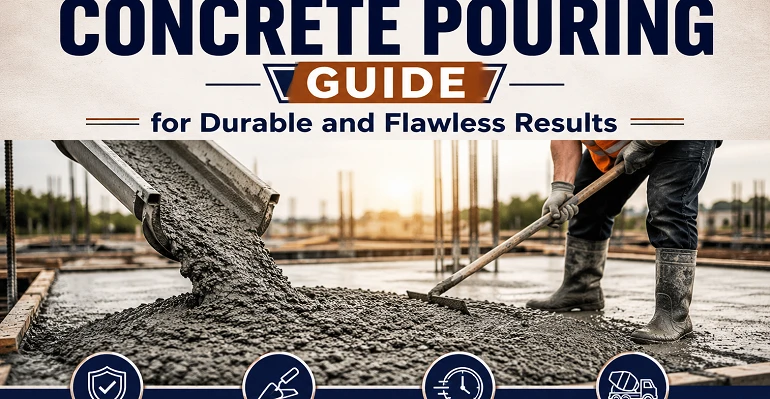
The actual concrete pouring must be done smoothly and continuously to avoid weak spots. Workers carefully direct the flow of the material, starting from the deepest part of the formwork. Spreading the mixture evenly prevents segregation, which is when heavy aggregates sink to the bottom. Proper technique ensures a uniform appearance and maximum structural stability.
Specialized tools are used to push the material into corners and eliminate trapped air. Consolidating the mixture with vibrating tools ensures a dense mass without any structural voids. Speed and efficiency are vital during this phase because the material begins to set quickly. The team must work together seamlessly to maintain a wet edge and avoid cold joints.
Step Five Leveling and Smoothing the Surface
Screeding is the very first finishing step immediately after the formwork is fully filled. A straight board is pulled across the top of the forms to strike off excess material. This requires significant physical effort and precision to establish the correct slope for water runoff. Proper drainage is absolutely essential to protect the surface from long-term water damage.
Following the screed, workers use a bull float to press down the coarse aggregate. This smoothing process brings a creamy layer to the top and closes small surface pores. Timing is everything here to ensure a beautiful and resilient final slab. Working the surface too early or too late can trap bleed water and cause future flaking.
Step Six The Final Finishing Touches
Once the surface has started to stiffen, the final aesthetic finishing techniques are applied. Broom finishing is incredibly popular for exterior spaces because it creates a slip-resistant texture. For interior spaces or decorative areas, troweling creates a perfectly smooth, hard, and dense surface. The chosen finish greatly impacts both the look and functionality of the space.
Control joints are also cut into the slab during this important finishing phase. The material naturally shrinks as it dries, and these grooves direct inevitable shrinkage cracks. These strategically placed joints ensure the cracks happen in straight, unnoticeable lines. Properly placed joints are the secret to a pristine appearance that lasts for decades.
Step Seven The Importance of Proper Curing
Curing is arguably the most critical step for achieving maximum strength and long-term durability. This process involves maintaining the right moisture and temperature conditions while the material hardens. Curing does not mean drying out, as the surface actually needs to stay damp for days. Contractors use various methods to carefully lock in this essential hydration moisture.
Skipping the curing process can reduce the strength of the final product significantly. Proper techniques such as wet blankets or curing compounds help maintain optimal chemical hydration. Taking the time to cure the slab properly guarantees a high-performance renovation. This diligent process results in a durable surface backed by our full warranty.
Navigating Weather Challenges for Concrete Pouring
Weather conditions play a massive role in the success of any concrete pouring project. Extreme heat causes the moisture to evaporate too quickly, leading to severe shrinkage cracks. To combat hot weather, contractors often work early in the morning to avoid the sun. Adding cold water to the mixture also helps delay the rapid setting time.
Cold weather presents an entirely different set of challenges for outdoor construction crews. Freezing temperatures can completely stop the hydration process, causing the material to remain weak. Insulating blankets and heated enclosures are frequently used to protect the pour during winter months. Experienced professionals know exactly how to adjust their techniques for any weather condition.
Residential vs Commercial Applications
Residential projects typically involve patios, driveways, sidewalks, and comprehensive home foundations. These builds focus heavily on aesthetics and creating functional, beautiful outdoor living spaces. We specialize in both exterior and interior transformations across the entire Brooklyn area. Homeowners often explore decorative options like stamped patterns to enhance curb appeal.
Commercial projects demand a much higher level of engineering and structural load capacity. High-traffic industrial floors, parking garages, and large-scale foundations require specialized high-strength mixtures. These projects also involve strict adherence to municipal regulations and rigorous safety inspections. Our team of skilled engineers is fully equipped to handle these large-scale demands flawlessly.
Maintaining Your New Surface
Once the surface is finished and fully cured, basic maintenance will keep it looking pristine. Applying a high-quality sealant every few years protects against stains, chemicals, and moisture penetration. This simple step prevents freeze-thaw damage and blocks oil spills from leaving permanent marks. Sealants dramatically extend the visual appeal and functional lifespan of your installation.
Regular cleaning with a pressure washer or stiff broom removes dirt that can degrade the surface. Addressing minor cracks immediately with a specialized filler prevents them from expanding into major issues. Proper drainage maintenance around the edges prevents water from undermining the supportive subbase. With minimal effort, your newly poured surface will provide decades of reliable service.
Why Choose a Professional Contractor
Attempting a do-it-yourself project is incredibly risky and often leads to costly, permanent mistakes. Professional contractors have the heavy equipment and technical knowledge required for this fast-paced job. At Green Point, we prioritize clear communication and professional reliability for every single client. Hiring experts guarantees that local building codes are met and necessary permits are secured.
Knowing the job is being handled by experienced professionals gives you total peace of mind. We take immense pride in delivering high-quality construction services that consistently exceed expectations. Our clients report that working with us provides a smooth and stress-free experience from start to finish. Partnering with a reliable team is the smartest investment you can make for your property.
Mastering the art of concrete pouring is essential for building safe, durable, and visually appealing structures. From initial site preparation to the final curing phase, every step requires technical precision. We perform a comprehensive final walkthrough for total satisfaction. By utilizing proven techniques, you ensure your project stands strong for generations as we deliver high-quality craftsmanship.