

Kitchen Renovation and Remodeling in Brooklyn NY
You've probably stood in your kitchen and thought, "why did someone put the stove there?" Maybe it's the one outlet that's never worked right, or the cabinet door that hits the fridge every time you open it. Most kitchens in older Brooklyn buildings weren't designed—they were patched together over decades by whoever owned the place before you.
A lot of kitchen renovations in this city focus on what you see. New countertops, new cabinet fronts, a tile backsplash that looks good in photos. Meanwhile the knob-and-tube wiring from the 1940s is still behind the wall, the galvanized pipes are corroding from the inside, and the layout still doesn't work because nobody touched the actual bones of the room.
What we actually do:
First, we look at what's behind the walls before we talk cabinets. In a lot of pre-war Brooklyn buildings, that means old wiring that can't handle modern appliances, or plumbing that's been patched so many times it's a matter of when, not if, it fails. We tell you what needs to be replaced versus what can stay.
Second, we work on layout, not just finishes. If your kitchen has a dead corner you never use, or the sink is nowhere near the stove, that's a workflow problem—and it's usually fixable even in a tight Brooklyn kitchen, without knocking down walls you don't want to lose.
Third, we sequence the work so it doesn't become a six-month ordeal. Electrical and plumbing first, then framing changes if needed, then the finishes everyone actually gets excited about. Doing it out of order is how renovations balloon in cost and time.
Why it matters more than people think:
A kitchen renovation that skips the wiring and plumbing is a renovation you'll redo in five years—except now you're tearing out cabinets and counters you just paid for to get at the same old pipes and wires. Old electrical in a kitchen isn't just inconvenient, it's a fire risk once you add a few more appliances pulling power than the circuit was built for.
Our approach:
We open up what needs opening before we quote final numbers, not after demo day when you're already committed. You'll know if there's old wiring or pipe behind that wall before we start, not as a surprise change order halfway through.
Local context:
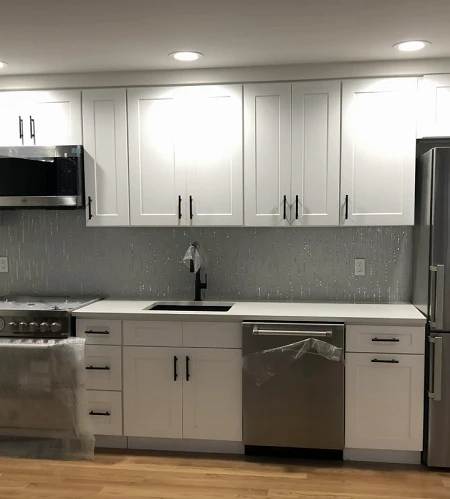
Brooklyn kitchens come in two flavors: tight galley kitchens in older walk-ups, and slightly bigger ones in brownstones that still have outdated layouts from past renovations. We've reworked kitchens in Park Slope brownstones, Sunset Park co-ops, and Bushwick walk-ups, and the constraints are different every time—sometimes it's space, sometimes it's a building's electrical capacity, sometimes it's a co-op board's renovation rules.
If your kitchen looks fine but doesn't work, or you know it's time for a real renovation, let's talk. We'll tell you what's actually going on behind those cabinets.