
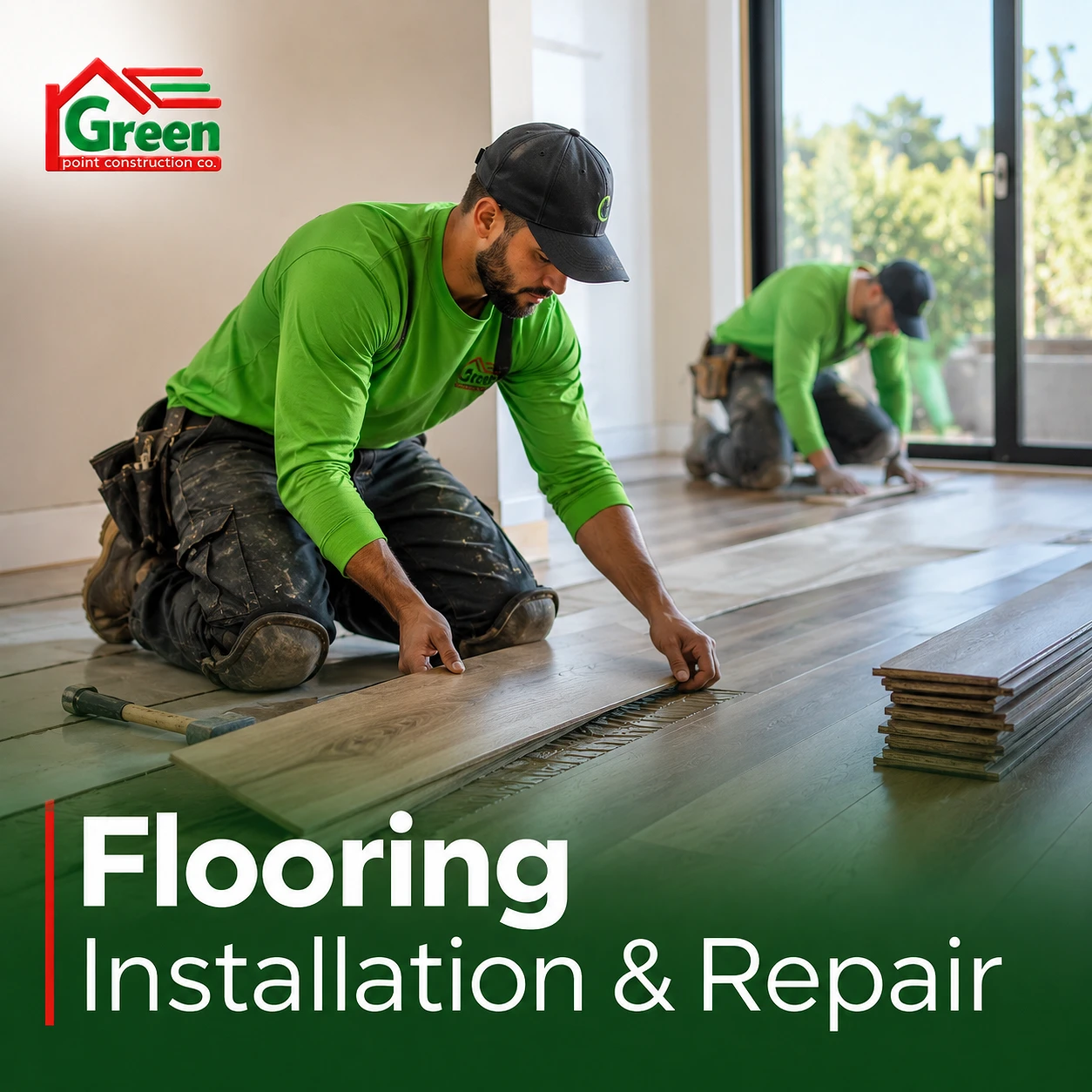
Best Flooring Installation & Repair in Brooklyn, NY
You finally get new floors installed, they look great for a few months, and then a board starts cupping near the radiator, or a gap opens up where two rooms meet. That's not bad luck. That's almost always a subfloor problem that got covered up instead of fixed.
Flooring installation gets treated like a surface-level job in a lot of Brooklyn renovations. Someone rips out the old floor, lays the new material down, and moves on. Nobody checks if the subfloor is level, dry, or even structurally sound. In older buildings, that subfloor might have decades of moisture damage, uneven leveling from past repairs, or squeaky spots where the joists have shifted slightly over the years.
What we actually do:
First, we check the subfloor before any new material goes down. If it's uneven, soft, or holding moisture, installing on top of it just means your new floor inherits the same problem. We level, dry out, or replace sections as needed.
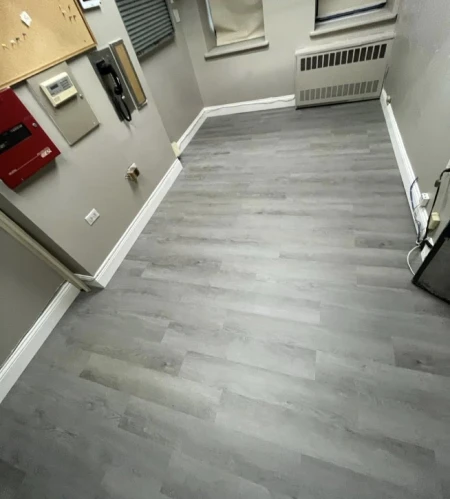
Second, we match the install method to the material and the room. Hardwood in a pre-war brownstone needs to account for old joist spacing and seasonal humidity swings. Tile in a bathroom or entryway needs proper waterproofing underneath, not just grout on top. LVP needs a flat, clean subfloor or it'll telegraph every imperfection underneath it.
Third, we deal with transitions and edge cases—thresholds between rooms, floors that meet stairs, areas around radiators or pipes. These are where most flooring jobs start looking sloppy, because they take more time and most installers rush through them.
Why it matters more than people think:
A floor installed over a bad subfloor doesn't fail right away. It fails slowly—a squeak here, a slight gap there, a board that starts to lift near a window where moisture gets in. By the time it's obviously a problem, you're often looking at pulling up flooring you just paid for to fix something that should've been addressed before installation.
Our approach:
We tell you what the subfloor looks like before we quote the flooring. If it needs work, that's part of the estimate up front, not a surprise add-on once your old floor is already torn out and you don't have many other options.
Local context:
A lot of Brooklyn brownstones still have original hardwood under layers of old carpet or linoleum, and sometimes that's worth restoring instead of replacing. Other buildings, especially walk-ups in Bushwick or Sunset Park, have subfloors that have been patched repeatedly and need real leveling work before anything new goes down. We've handled both, and we'll tell you honestly which situation you're in.
If your floors are squeaking, gapping, or just due for a real install, let's take a look underneath before deciding what's next.